Posts

Showing posts with the label For Loop

C Program to Seperate Even & Odd Elements of an Array

In this program we find the odd and even elements of an array and insert them into two different arrays. Here the logic of the program to find whether a number is odd or even is used. //Program #include <stdio.h> void main() { long int ARR[10], OAR[10], EAR[10]; int i, j = 0, k = 0, n;   printf( "Enter the size of array AR \n "); scanf( "%d" , &n); printf( "Enter the elements of the array \n "); for (i = 0; i < n; i++) { scanf( "% ld " , &ARR[i]); fflush(stdin); } /* Copy odd and even elements into their respective arrays */ for (i = 0; i < n; i++) { if (ARR[i] % 2 == 0) { EAR[j] = ARR[i]; j++; } else { OAR[k] = ARR[i]; k++; } } printf( "The elements of OAR are \n "); for (i = 0; i < j; i++) { printf( "% ld \n ", OAR[i]); } printf( "The elements of EAR are \n "...
C Program to Find The Largest Number in an Array

This program makes the concept of array more clear. As arrays are continuous memory locations, we can access them easily by incrementing the number (variable) in square bracket. This method is used in this program. Here using loop each and every element is comparing it with the other elements. //program #include <stdio .h>   int main ( ) { int array [ 50 ] , size , i , largest ; printf ( " \n Enter the size of the array: " ) ; scanf ( "%d" , & size ) ; printf ( " \n Enter %d elements of the array: " , size ) ; for ( i = 0 ; i < size ; i ++ ) scanf ( "%d" , & array [ i ] ) ; largest = array [ 0 ] ; for ( i = 1 ; i < size ; i ++ ) { if ( largest < array [ i ] ) largest = array [ i ] ; } printf ( " \n largest element present in the given array is : %d" , largest ) ; return 0 ; }

C Program to Calculate The Average of Array Elements

It is as simple as the previous program in which we calculated the sum of array elements. //Program #include <stdio.h> void main() {     int n, i;        float num[100], sum = 0.0, average;     printf("Enter the numbers of elements: ");     scanf("%d", &n);     while (n > 100 || n <= 0)     {         printf("Error! number should in range of (1 to 100).\n");         printf("Enter the number again: ");         scanf("%d", &n);     }     for(i = 0; i < n; ++i)     {         printf("%d. Enter number: ", i+1);         scanf("%f", &num[i]);         sum += num[i];     } ...

C Program to Calculate Sum of Array Elements

Array is a mile stone of C Program which we may use almost everywhere. Here is a basic program to understand array, memory locations and structure of array etc. What is an array? An array is a group of continuous memory locations which we can access by the address. An array of a particular datatype can only store values of that data type(often it convert and use the given data). Array initialization The syntax of array initialization in C is : datatype array_name[size]; Algorithm Here the array named 'array' of type 'int' is used to store different numbers and adding them by separately accessing the array elements using for loop. //Program //Program #include <stdio.h< voide main() {     int n, i;        float num[100], sum = 0.0, average;     printf("Enter the numbers of elements: ");     scanf("%d", &n);     while (n > 100 || n <= 0)     { ...

C Program to Disply Armstrong Number Series

What is an Armstrong number? An Armstrong number is a number that is the sum of its own digits each raised to the power of the number of digits. This definition depends on the base b of the number system used, e.g., b  = 10 for the decimal system or b  = 2 for the binary system. (Read more about Armstrong number) For generating Armstrong number series we use the following algorithm. Algorithm A positive integer is called an Armstrong number of order n if abcd... = a n + b n + c n + d n + ...   In case of 3 digit Armstrong numbers the sum of cubes of the digits of the number will be equal to the actual number. Thus we can use a conditional statement to split a number, multiply, add and check with original number.   #include < stdio .h > #include < math .h > int main() { int low, high, i, temp1, temp2, remainder, n = 0, result = 0; printf("Enter two numbers(intervals): "); scanf("%d %d", &low, &high); pri...

C Program to Display Prime Number series

This is a simple program. Here the technique used is to generate prime numbers from one lower limit to one upper limit using loop. For more details refer our previous program : C Program to Check Whether a Number is Prime or Not. //Program #include < stdio.h > int main() {     int low, high, i, flag;     printf("Enter two numbers(intervals): ");     scanf("%d %d", &low, &high);     printf("Prime numbers between %d and %d are: ", low, high);     while (low < high)     {         flag = 0;         for(i = 2; i <= low/2; ++i)         {             if(low % i == 0)             {             ...

C Program to Check Whether a Number is Prime or Not

What is an Armstrong number? An Armstrong number is a number that is the sum of its own digits each raised to the power of the number of digits. This definition depends on the base b of the number system used, e.g., b  = 10 for the decimal system or b  = 2 for the binary system. (Read more about Armstrong number) For generating Armstrong number series we use the following algorithm. Algorithm A positive integer is called an Armstrong number of order n if abcd... = a n + b n + c n + d n + ...   In case of 3 digit Armstrong numbers the sum of cubes of the digits of the number will be equal to the actual number. Thus we can use a conditional statement to split a number, multiply, add and check with original number.   #include < stdio .h > #include < math .h > int main() { int low, high, i, temp1, temp2, remainder, n = 0, result = 0; printf("Enter two numbers(intervals): "); scanf("%d %d", &low, &high); pri...

Number Magic2 Using For loop #c

The Output look like this 1 2 3 4 5 6 7 8 9 10 //Lets start the program #include<stdio.h> #include<conio.h> void main() { int j,k,b=31,c; clrscr(); for(c=9;c>=1;c=c-1,b=b+1)    {printf("\n");     for(j=1;j<=b;j++)     printf(" ");     for(k=1;k<=c;k++)     printf("%d ",c);     }     getch();     } Lets Start Next Program. The Out Will look like this.                                                    1                            ...

Number Magics using For loop #c

The program to get output like this 1 2 2 3 3 3 4 4 4 4 //It's a simple program.Here we print only 9 rows. #include<stdio.h> #include<conio.h> void main() { int i,n=9,k; //Now we use this for loop to check the number of rows. for(i=1;i<=n,i++) //Here we use this for loop to print like 1 or 2 2 or 3 3 3.      { for (k=1;k<=i;k++)               printf("%d",i);       } getch(); }

Fibonacci Series using For loop #c

The Fibonacci Series is like  0,1,1,2,3,5,8,13------------ or 0 ,  0+1, 1+1 ,2+1, 3+2, 5+3, 8+5 // A program to display Fibonacci Series using For loop in c. #include<stdio.h> #include<conio.h> void main() { int n,i,x=1,y=0,z=0; clrscr(); printf("Enter the limit\n"); scanf("%d",&n); for (i=1;i<=n;i++)     { printf("%d,",z);       z=x+y;       x=y;       y=z;       }       getch();       }

Factorial Of a Number Using For loop

//Factorial of a Number Using For loop in C. #include<stdio.h> #include<conio.h> void main() { int n,i,f; clrscr(); printf("Enter a Number\n"); scanf("%d",&n); for(i=1,f=1;i<=n;i++)    {f=f*i;}    printf("The factorial is %d",f);    getch();    } //Multiplication table of a user defined number using for loop in C. #include<stdio.h> #include<conio.h> void main() { int i,n,p; clrscr(); printf("Enter a number\n"); scanf("%d",&n); for (i=1;i<=10;i++)     {p=i*n;      printf("%d X %d = %d\n",n,i,p);      }      getch();      } //Multiplication table of All numbers up to 10 using for loop in C. #include<stdio.h> #include<conio.h> void main() { int n,i,p,j; clrscr(); for (i=1;i<=10;i++)     {printf("The multiplication table of %d\n",i);     p...

For Loop

Image
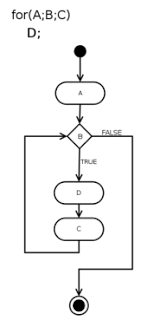
 Now i am talking about "for loop". For loop is similar to while loop. You can use while loop instead of for loop and also while loop instead of while loop. The Synatax of for loop is  for(initiation;condition;statement)